Buying a Tanjore painting: how to tell real gold-foil work
A real Tanjore painting is built up by hand in layers: cloth on a wooden board, a chalk-paste base, raised relief work, gold foil pressed over the relief, then stones and bright, flat colour. To judge one, look at the relief from the side, the evenness of the gold, the fineness of the faces and outlines, and ask the seller in writing what kind of gold foil was used. Imitation foil tends to dull or darken with age; good gold foil keeps its warm glow.
Tanjore paintings are among the most treasured pieces in many Telugu and Tamil homes, often bought for a new house, a wedding or a pooja room. Here is how to buy one with confidence.
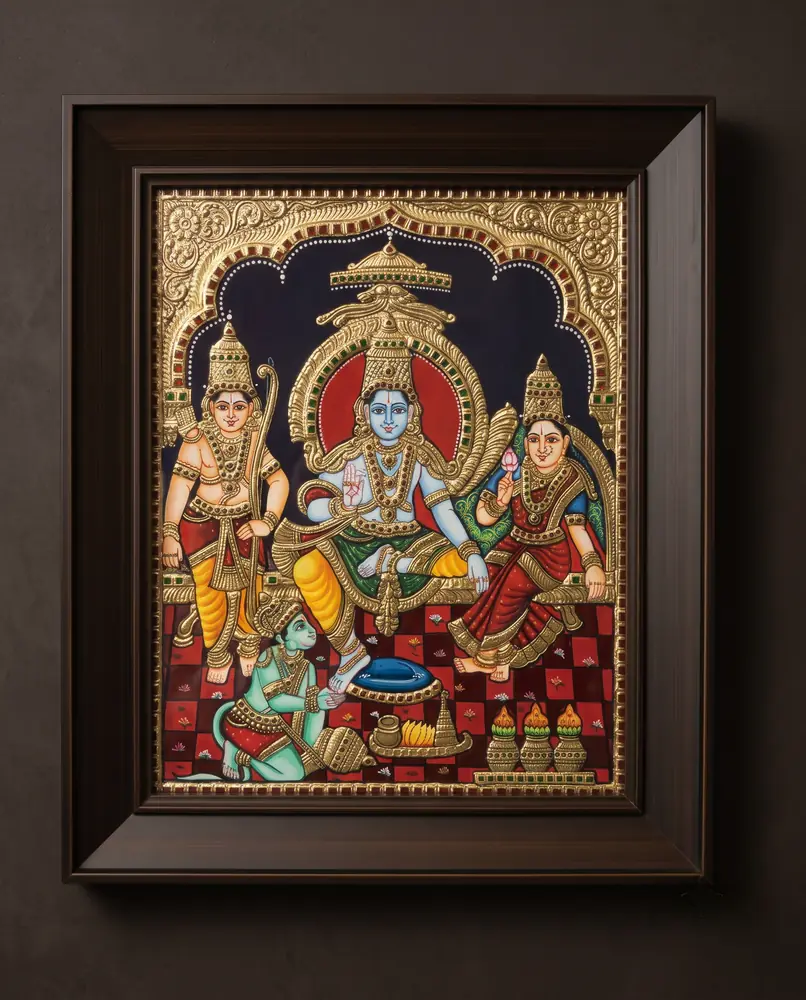
What a Tanjore painting is
Tanjore, or Thanjavur, painting is a classical South Indian art form named after the town of Thanjavur in Tamil Nadu, where it flourished under royal patronage. It is recognised with a Geographical Indication tag. The subjects are usually deities and scenes from the epics — Ram Darbar, Krishna as a child, Balaji, Lakshmi, Shreenath Ji — painted with rounded faces, large expressive eyes and rich ornament.
What sets it apart from other painting is texture. Parts of the picture — crowns, jewellery, pillars, arches, borders — are raised from the surface and covered in gold foil, so they catch light and seem to glow, especially in lamplight.
How a Tanjore painting is made
- The board. A cloth is pasted onto a wooden board to create a stable surface.
- The base. A smooth paste of chalk and gum is spread over the cloth and polished.
- The drawing. The figures and composition are sketched by hand.
- The relief. A thicker paste is built up by hand into raised details — ornaments, crowns, pillars and borders — and left to dry.
- Gold foil and stones. Gold foil is cut and pressed over the raised work; coloured stones or glass are set into it.
- Colour. The painting is finished with bright, flat colours and fine dark outlines, then framed.
Because each layer must dry, a good piece takes time. That time shows in the finish.
How to tell good work from poor work
Look at the relief from the side
Tilt your head and look across the surface. Hand-built relief has real height and gentle, slightly irregular edges. A flat, printed picture with foil stuck on top, or a moulded plastic relief with perfectly identical details, is a different product.
Look closely at the gold
Good gold foil lies smoothly over the relief and follows its shape without tears, wrinkles or lifting edges. The colour should be warm and even. Gold foil quality varies widely, and the difference is not always visible on day one — which is why the next step matters.
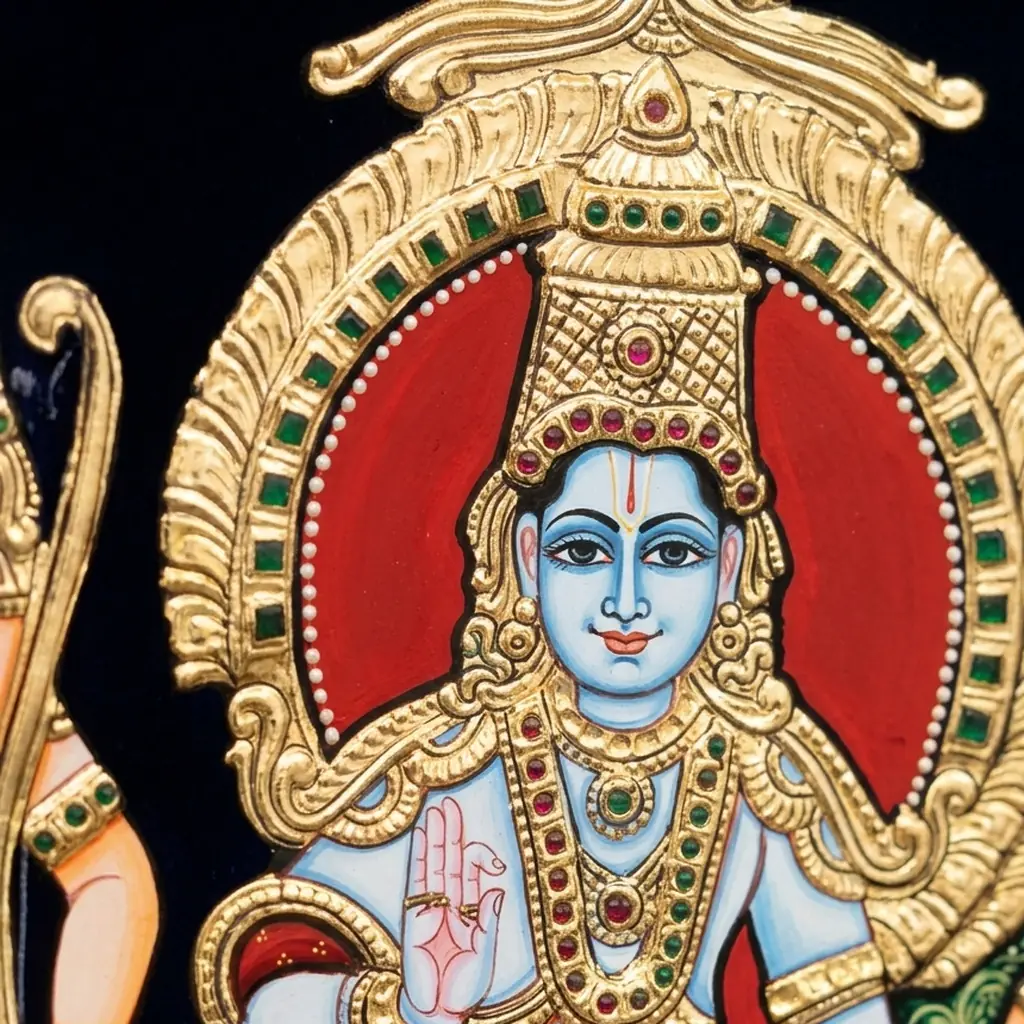
Ask about the foil, in writing
Ask the seller exactly what foil was used and ask for it on the invoice. Imitation foils can look bright at first but tend to dull, darken or turn brassy over the years. A seller who stands behind the work will tell you plainly. Never scratch the foil to test it; you will only damage the painting.
Judge the painting itself
Look at the faces, eyes and hands — they show the artist's skill more than anything else. Outlines should be fine and confident, colours clean and filled to the edge, and the composition balanced. Small hand-made variations are a good sign; smudges and bleeding colour are not.
Check the stones and frame
Stones should be firmly set and evenly spaced. Traditional frames are dark, solid wood; a good frame protects the painting, and glass in front of it keeps dust off the gold.
Choosing a subject and size
Many families choose by devotion: Balaji or Lakshmi for a new home, Krishna for a child's room, Ram Darbar for a pooja room or entrance. Think also about where it will hang. A large Ram Darbar can anchor a formal living room wall; a smaller Bal Krishna sits well in a study or bedroom. Tanjore-work boxes make thoughtful wedding and housewarming gifts.
Hanging and lighting a Tanjore painting
- Hang the centre of the painting at roughly eye level, around 145–155 cm from the floor, or lower above a console or pooja unit.
- Light it with a warm light from slightly above and to the side, so the relief casts small shadows and the gold glows. Our lighting guide explains accent lighting.
- Avoid direct sun, which fades colour over time, and walls that get damp in the monsoon.
Caring for it in Hyderabad
Dust it gently with a dry, soft brush — never a wet cloth. Keep it away from kitchens, where oil and smoke settle on the gold, and from bathroom walls and AC units that drip. During the monsoon, make sure the wall behind it stays dry, and check the back of the frame once a year.
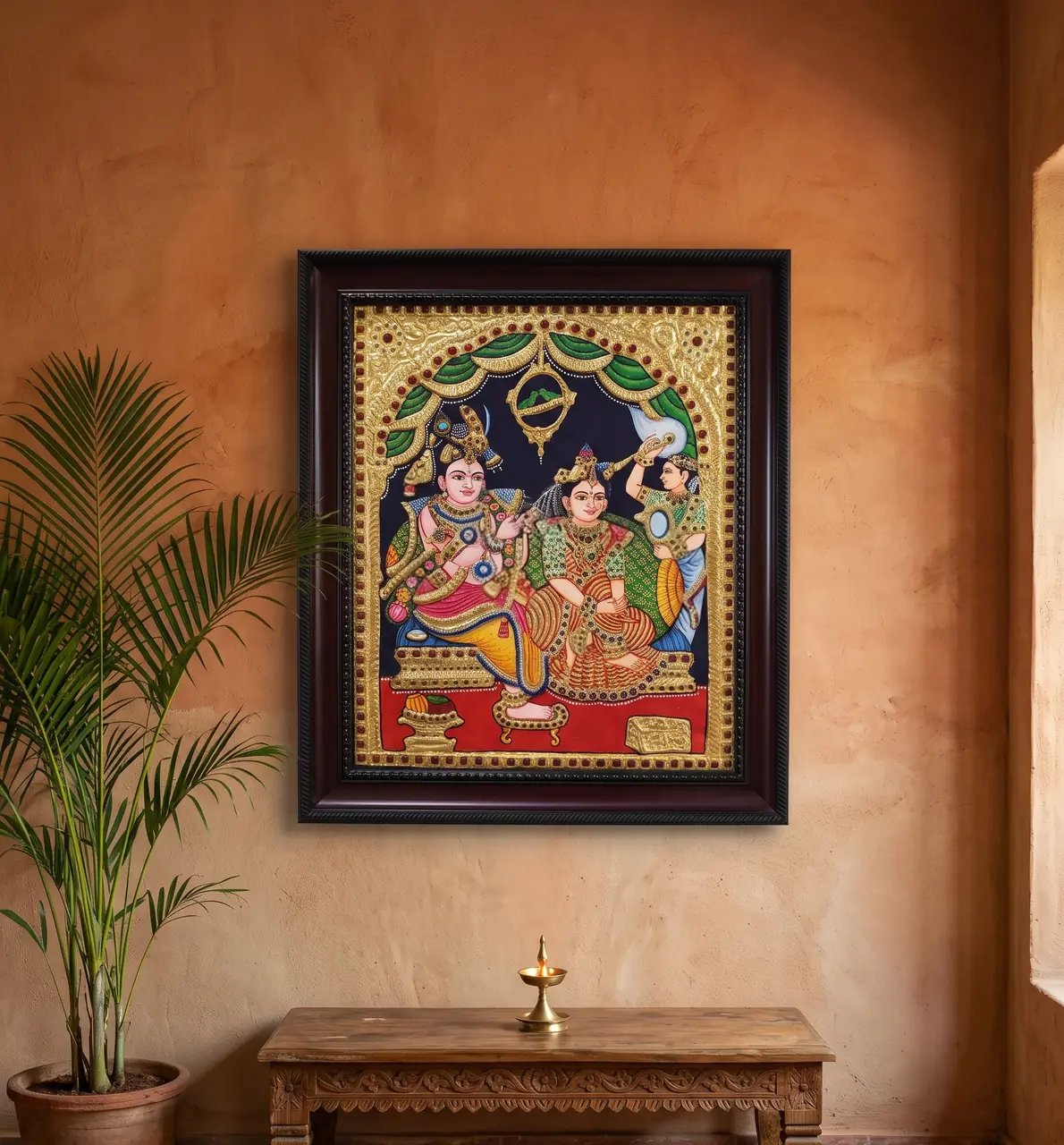
See Tanjore paintings at Hasta
Hasta is Galleca's House of art, chosen with the same eye as the furniture. It is now showing a Tanjore collection that includes Ram Darbar, Bal Krishna, Balaji with Lakshmi, Shreenath Ji, Radha Krishna and Tanjore-work boxes. See them in person and ask us about each piece. For objects to sit beside them, visit The Elements.
Questions people ask
What is a Tanjore painting?
A classical South Indian painting style from Thanjavur, Tamil Nadu, known for raised relief work covered in gold foil, set stones and bright colours, usually showing deities.
How can I tell if the gold foil is real?
Good gold foil is smooth, warm and even, and keeps its glow over the years, while imitation foil tends to dull or darken. Ask the seller in writing what foil was used; never scratch it to test.
How do I clean a Tanjore painting?
Dust it gently with a dry, soft brush. Do not use water or cleaning sprays, and keep it away from kitchen smoke and damp walls.
Where should I hang a Tanjore painting at home?
On a dry wall away from direct sun, at about eye level, with warm light from above and to the side so the gold relief glows.
Where can I see Tanjore paintings in Hyderabad?
At Hasta, inside the Galleca showroom on Road No. 12, Banjara Hills, open every day 10:30 am to 9 pm.
See it in person, in Banjara Hills.
Galleca Luxe Life, Plot No. 515 & 516, Road No. 12, Banjara Hills, Hyderabad 500034. Open every day, 10:30 am – 9 pm. Call or WhatsApp +91 77999 90844 or call +91 79817 99668.
More guides
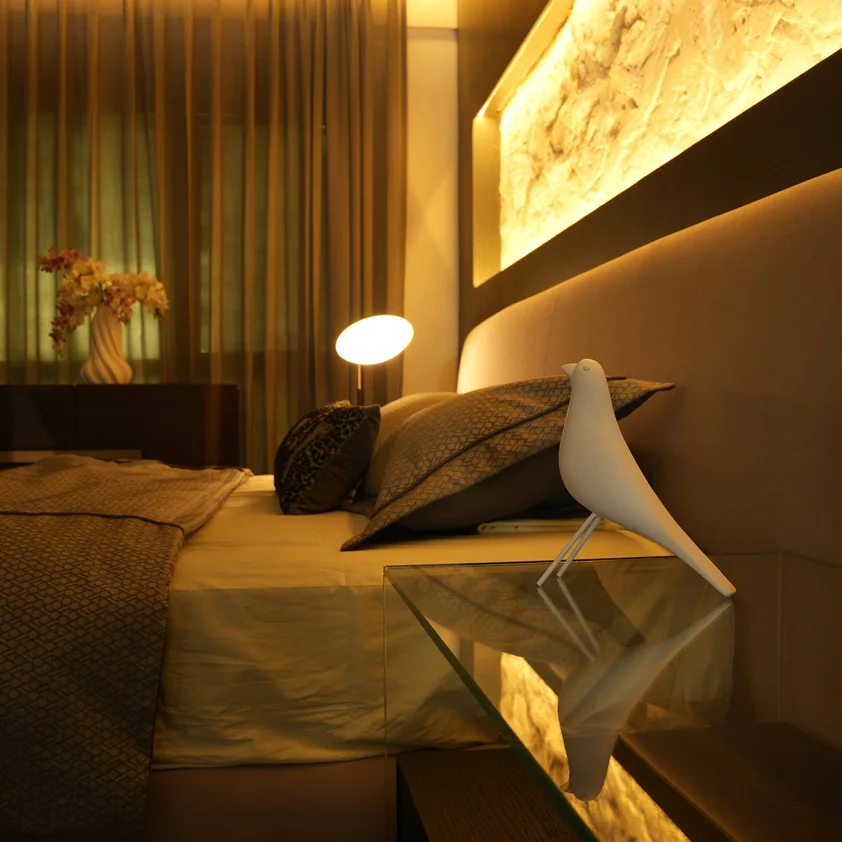 MoonHow to light a luxury home: layers, warmth and the right fixturesHow to light a home beautifully — ambient, task, accent and decorative layers, warm colour temperatures, dimmers, pendant heights and lamps — with tips for Hyderabad homes.
 The HearthLuxury furniture shops in Banjara Hills: a guide to the Galleca showroom on Road No. 12Planning a visit to the luxury furniture shops in Banjara Hills, Hyderabad? What to see at Galleca on Road No. 12 — nine Houses across six floors — and how to get the most from a showroom visit.
 DomaBespoke furniture in Hyderabad: how a custom piece is madeHow custom furniture is made in Hyderabad, step by step — from first idea to installation at Doma, Galleca's own workshop — and what to bring, decide and check along the way.