How to light a luxury home: layers, warmth and the right fixtures
A beautifully lit home uses several layers of light rather than one bright ceiling: soft ambient light to fill the room, task light where you read, cook or work, accent light on art and texture, and decorative pieces — pendants, table and floor lamps — that glow in their own right. Keep living spaces warm (around 2700–3000K), put the main circuits on dimmers, and plan the wiring before the false ceiling goes in.
Light is the last material in a room and the first thing you feel. Here is how to get it right.
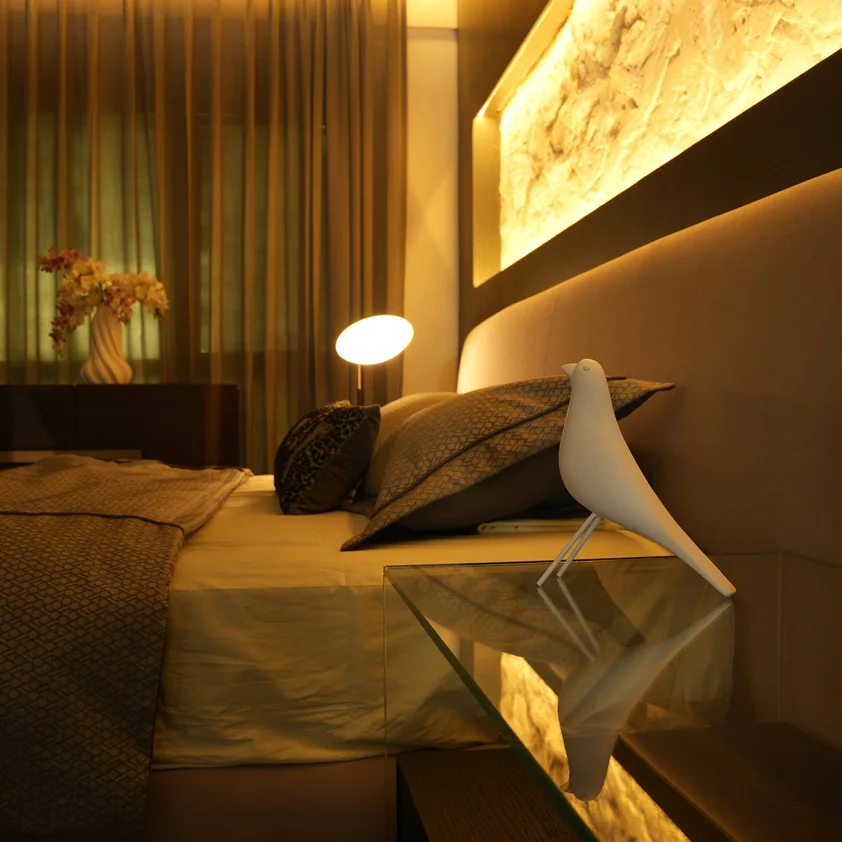
The four layers of light
1. Ambient light
The general glow that lets you move around safely. In Hyderabad homes this often comes from cove lighting hidden in a false ceiling, or from recessed downlights. Aim for even, soft light without harsh spots on the floor. Ambient light alone makes a room look flat; it is the base, not the whole recipe.
2. Task light
Focused light where you need to see clearly: under kitchen cabinets, above a desk, beside a reading chair, at a dressing mirror. Task light should come from the side or front, not from behind you, so you are not working in your own shadow.
3. Accent light
Light that draws the eye: a beam on a painting, a wash down a stone or textured wall, a lit niche or bookshelf. Accent light is what makes a room look designed. Gold-foil art such as a Tanjore painting comes alive under a warm, angled light.
4. Decorative light
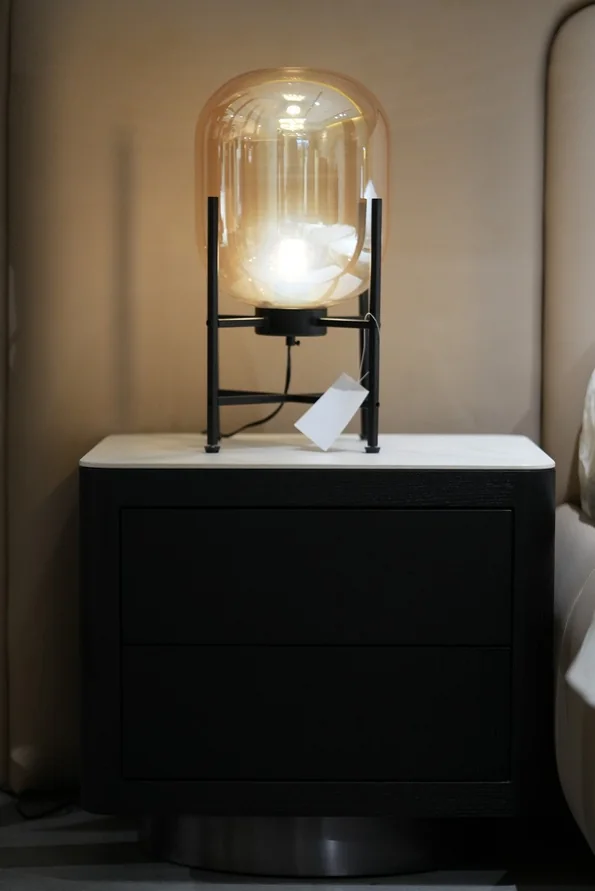
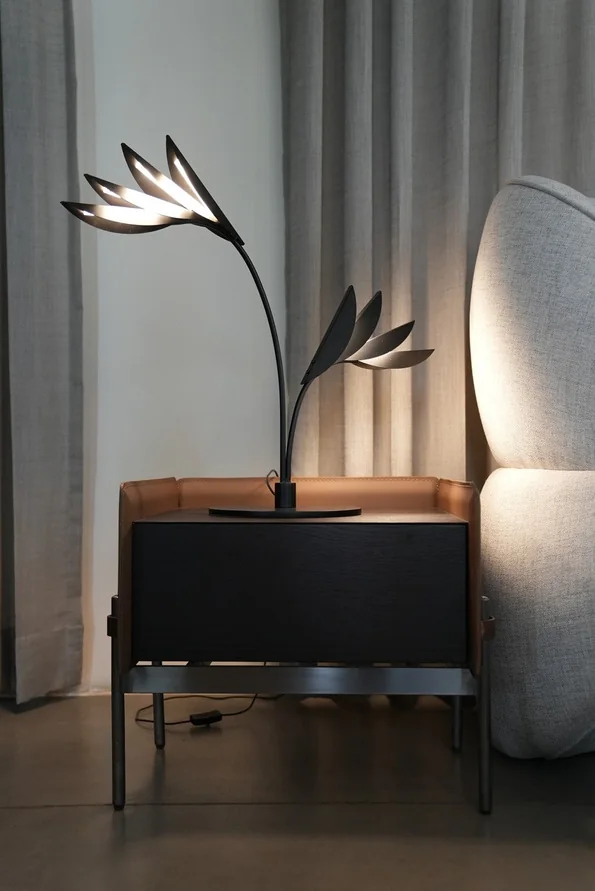
Pendants, chandeliers, table lamps and floor lamps — fixtures chosen as much for their form as for their glow. They are the jewellery of a room, and they give warm, low light at eye level in the evening, which is the most flattering light there is.
Colour temperature: keep it warm
Light bulbs are rated in kelvin (K). Lower numbers are warmer and more golden; higher numbers are cooler and bluer.
- 2700–3000K for living rooms, dining rooms and bedrooms: warm, relaxed and flattering to skin, wood, leather and brass.
- 3000–4000K for kitchens, bathrooms and studies, where you need to see clearly but still want warmth.
- Avoid mixing very different colour temperatures in one room — it looks patchy.
Also look for a high colour rendering index (CRI 90 or above, if it is listed). It means colours — fabric, food, skin, art — look true.
Room by room
Living room
Combine cove or recessed ambient light with two or three lamps at different heights — a floor lamp beside the sofa, a table lamp on a console, an accent light on art. Put each on a separate switch or dimmer so the room can move from bright afternoon to quiet evening.
Dining room
A pendant or chandelier over the table is the classic focus. Hang it so the bottom sits roughly 75–85 cm above the table top: low enough to feel intimate, high enough not to block faces across the table. For long tables, use a linear pendant or two or three pendants in a row. Always put it on a dimmer.
Bedroom
Soft ambient light, reading lights on each side of the bed that do not disturb the other person, and a low night light for the way to the bathroom. Backlit headboards and bedside lamps make a bedroom feel like a hotel suite.
Kitchen
Bright, even task light under wall cabinets so the counter is lit without shadows, plus pendants over an island if you have one. Our modular kitchen guide covers the rest of the planning.
Plan before the false ceiling
Most Hyderabad homes are finished with false ceilings, and most lighting mistakes are made at that stage. Before the ceiling is closed:
- Decide where the furniture goes — especially the dining table and the bed — so pendants and reading lights land in the right place.
- Mark switch and dimmer positions by the doors you actually use.
- Add power points where table and floor lamps will stand, so cables do not cross the floor.
- Plan accent light for the walls where art will hang.
Choosing decorative lights
Choose pendants and lamps the way you would choose furniture: scale first. A pendant that looks large in a showroom often looks right over a dining table for eight. Look at the light with the bulb on, not just the fixture: glass, fabric, metal and stone all change the glow. Brass and warm metals reflect a golden light; opal glass diffuses it softly; fabric shades throw light up and down.
See lighting in person
Moon is Galleca's House of lighting: table, floor and pendant lights chosen for the glow as much as the form. Bring photographs of your rooms and a floor plan. For the objects and accessories that finish a lit room, visit The Elements.
Questions people ask
What colour temperature is best for a living room?
Warm white, around 2700–3000K. It is relaxing and flattering to skin, wood and fabric.
How high should a pendant light hang over a dining table?
Roughly 75–85 cm from the table top to the bottom of the pendant, adjusted for the size of the fixture and the height of the room.
What are the layers of lighting?
Ambient light for general glow, task light for reading, cooking and work, accent light for art and texture, and decorative light from pendants and lamps.
When should I plan lighting in a new home?
Before the false ceiling and electrical work are finished, once you know where the main furniture will go.
Where can I see designer lighting in Hyderabad?
At Moon, inside the Galleca showroom on Road No. 12, Banjara Hills, open every day 10:30 am to 9 pm.
See it in person, in Banjara Hills.
Galleca Luxe Life, Plot No. 515 & 516, Road No. 12, Banjara Hills, Hyderabad 500034. Open every day, 10:30 am – 9 pm. Call or WhatsApp +91 77999 90844 or call +91 79817 99668.
More guides
 The HearthChoosing a sofa for a Hyderabad homeHow to choose a sofa for Hyderabad's heat, dust and sun: fabric, bouclé, velvet, leather or nubuck, how many seats, seat depth and the measurements to take before you buy.
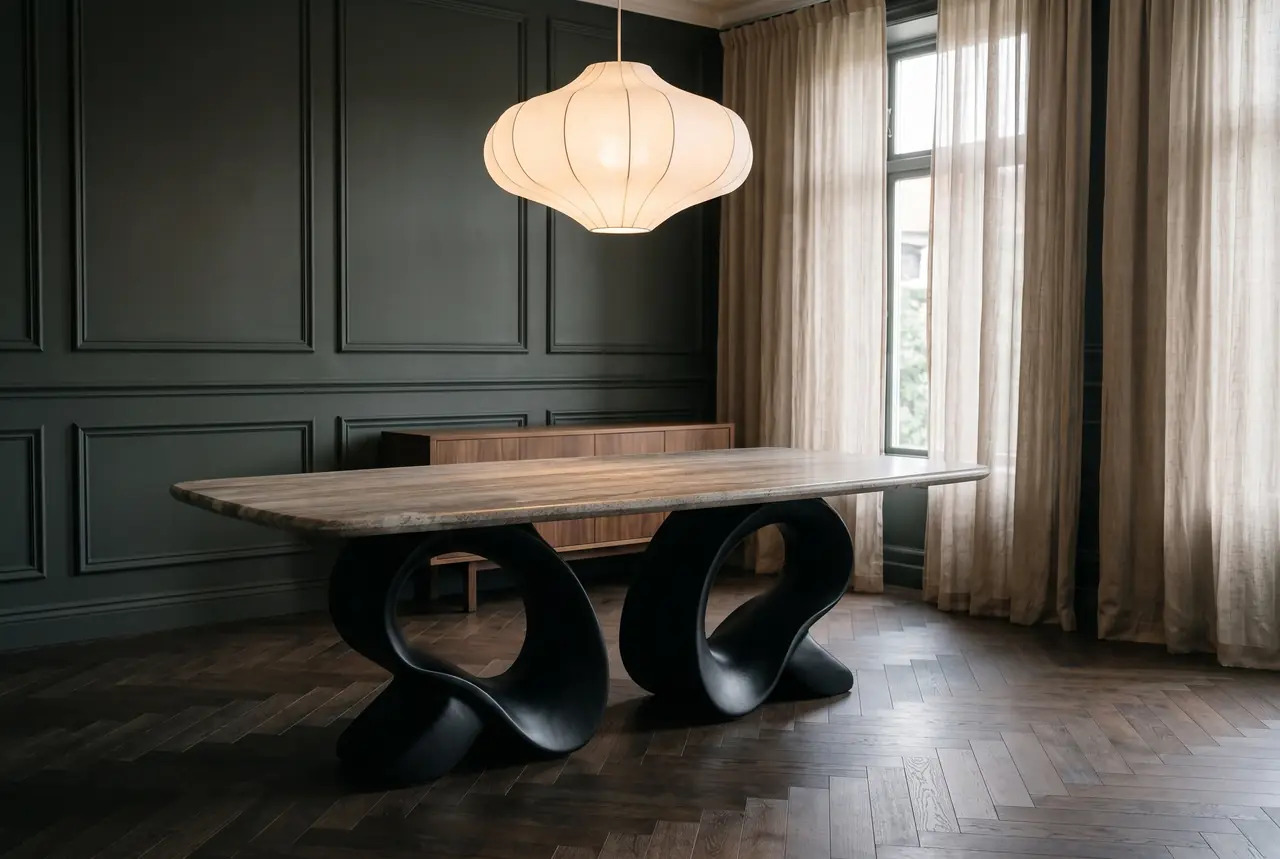 The HearthStone dining tables: marble, travertine and onyx comparedMarble, travertine or onyx? How the three stones compare for a dining table in an Indian home — looks, strength, stains from turmeric and lemon, sealing, sizes and care.
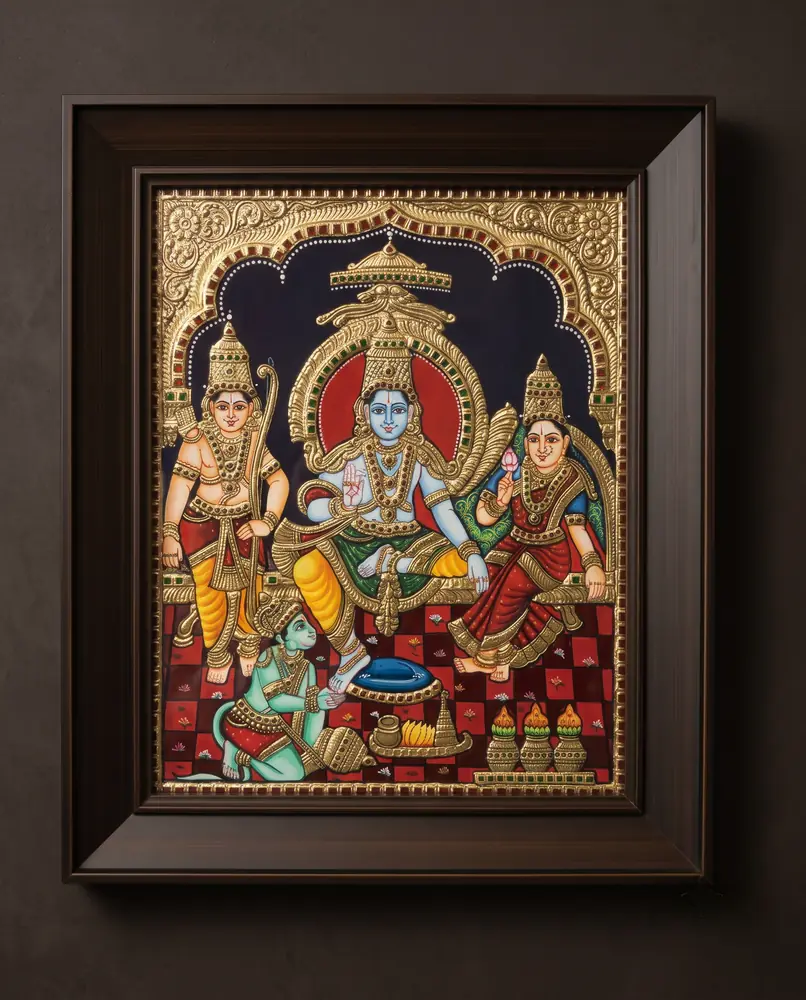 HastaBuying a Tanjore painting: how to tell real gold-foil workWhat makes a genuine Tanjore (Thanjavur) painting — the raised gesso work, gold foil and stones — how to judge quality, where to hang one and how to care for it in a Hyderabad home.