Stone dining tables: marble, travertine and onyx compared
Marble is the classic choice — veined, cool and timeless — but it etches with lemon, tamarind and vinegar. Travertine is warmer and more relaxed, with natural pores that are usually filled, and suits a honed, matt look. Onyx is the most dramatic: translucent, richly patterned and often backed for strength, but the most delicate of the three. All three need sealing and coasters in an Indian dining room; choose by how you entertain as much as by how they look.
A stone dining table becomes the centre of a home. Here is how to choose the right stone, size and base.
Why stone for a dining table?
Stone is heavy, cool to the touch and unique — no two slabs are the same. It handles heat from serving dishes better than most timbers and lasts for generations if it is cared for. The trade-off is that natural stone is porous to some degree, and Indian food is hard on it: turmeric, oil, lemon, tamarind, tomato and curd all test a stone surface.
Marble
Looks: fine veining on white, cream, grey, green or black backgrounds; polished or honed. Strength: hard enough for daily dining but can chip at sharp edges. Watch out for: marble is a calcium-based stone, so acids such as lemon juice, tamarind, vinegar and some cleaners etch the surface, leaving dull marks, even when sealed. Oil and turmeric can stain if left. Best for: families who love the look and are happy to use placemats and wipe spills straight away. A honed (matt) finish hides etching better than a high polish.
Travertine
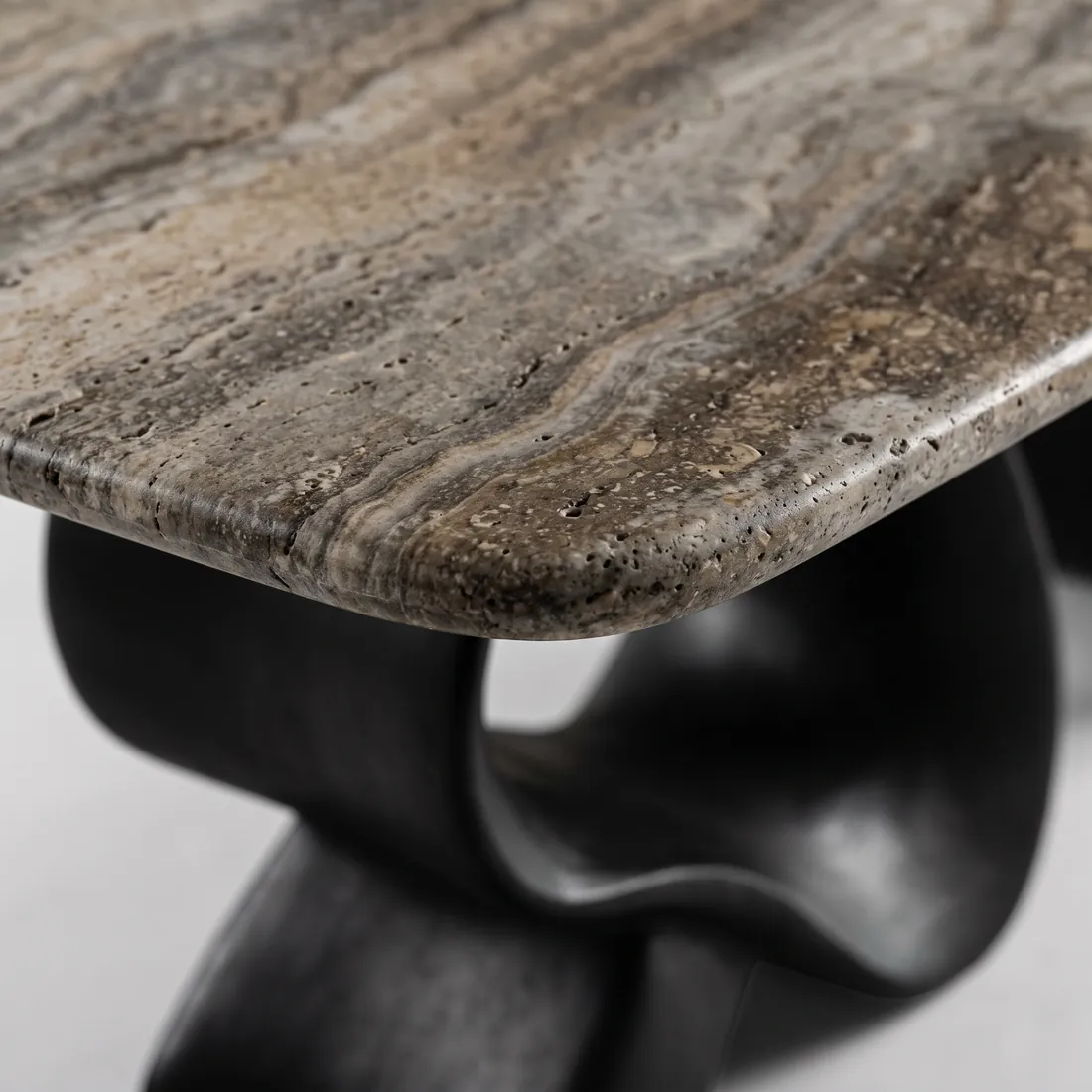
Looks: warm, earthy beiges, greys and browns, with natural layered bands and small holes. Strength: similar care to marble — it is also calcium-based and etches with acids. Watch out for: the natural pores are usually filled with resin or a matching filler for a dining surface; ask whether the top is filled and sealed. Unfilled pores collect crumbs and liquid. Best for: relaxed, modern rooms and anyone who likes a matt, natural texture. Its slightly rustic character also hides small marks well.
Onyx
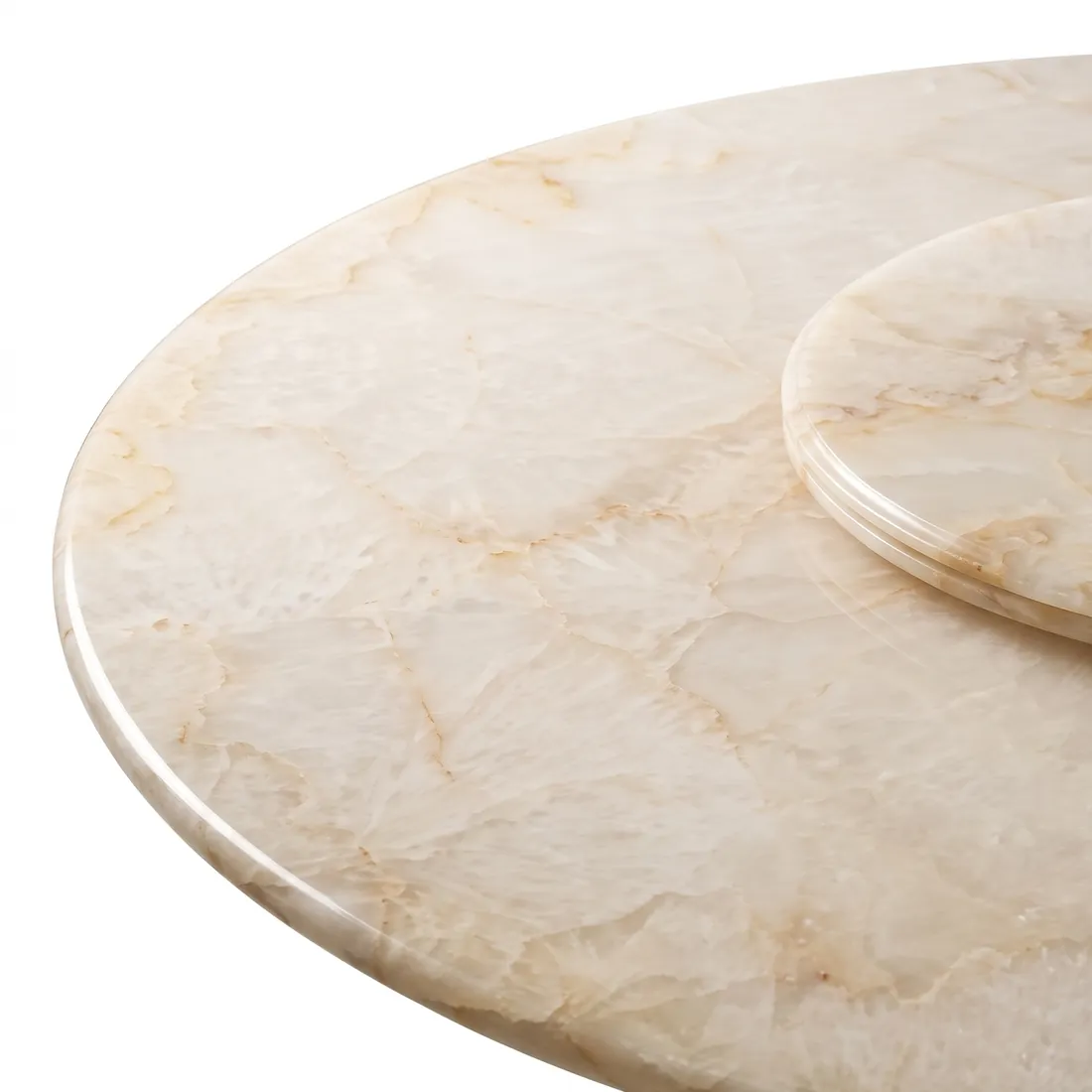
Looks: the showpiece. Onyx is translucent, with flowing bands of honey, cream, green or white, and some slabs glow when light passes through them. Strength: softer and more brittle than marble, so dining tops are usually reinforced or backed. Watch out for: it scratches and etches more easily than marble and must be treated gently — no dragging of heavy serving vessels. Best for: formal dining rooms where the table is used with care, and for entertaining that is more about presentation than daily family meals.
At a glance
| Marble | Travertine | Onyx | |
|---|---|---|---|
| Look | Classic veining | Warm, earthy, matt | Translucent, dramatic |
| Etches with lemon and vinegar | Yes | Yes | Yes, easily |
| Scratch resistance | Good | Good | Lower |
| Hides marks | Honed: well | Well | Less well |
| Suits | Most dining rooms | Relaxed, modern rooms | Formal dining |
Size and shape
- Width per person: allow about 60 cm of table edge per diner so elbows do not clash.
- Clearance: leave around 90 cm between the table edge and walls or cabinets, so chairs can be pulled out and people can walk behind.
- Rectangular tables suit long rooms and seat more people in a row; an eight-seater is a common choice for Hyderabad villas where family gatherings are large.
- Round tables are sociable — everyone can see everyone — and suit square rooms. A centre turntable makes sharing dishes easy, which suits Indian meals well.
The base matters as much as the top
A stone top is heavy. The base must carry it without wobble and leave room for knees and chair legs. Pedestal and sculptural bases free up legroom at the ends; four-leg bases are simple and stable. Check where your knees go when you sit at each place, and check that your floor can take the weight, especially on upper floors.
Caring for a stone table
- Ask whether the top is sealed, with what, and how often it should be resealed.
- Use placemats, coasters and trivets — especially under pickles, lemon water, wine and curries.
- Wipe spills straight away with a soft damp cloth; dry the surface afterwards.
- Clean with pH-neutral stone cleaner, never vinegar, lemon or harsh bathroom cleaners.
- Lift dishes rather than dragging them.
See stone tables in person
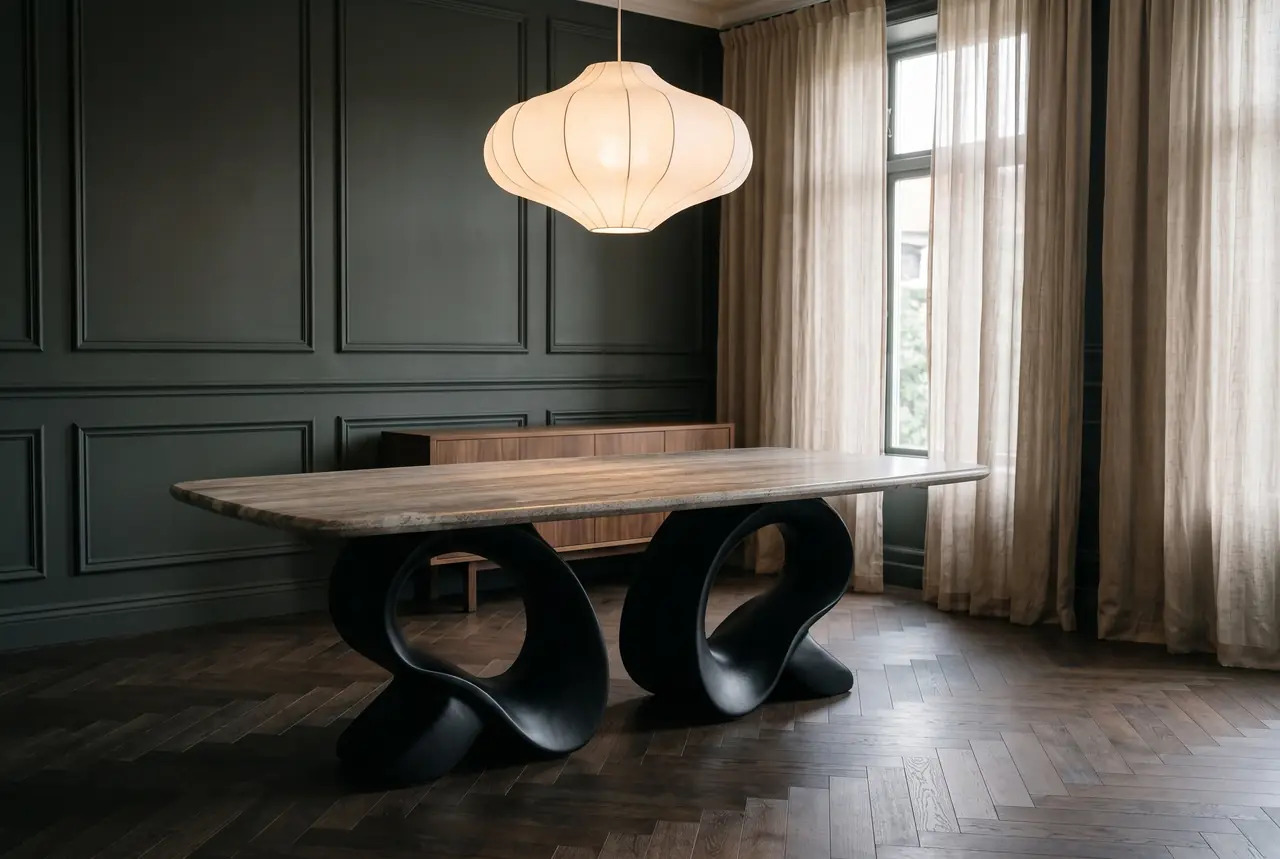
At The Hearth you can see an eight-seater dining table in travertine and black and a round dining table in crystal onyx. Stone is best judged in person: look at the slab in daylight, run your hand over the edge and ask how it is sealed. For a table cut to a particular size, ask about Doma, our own workshop.
Questions people ask
Is marble good for a dining table in an Indian home?
Yes, if you are happy to use placemats and wipe spills quickly. Marble etches with acids such as lemon and tamarind, and a honed finish hides this better than a polished one.
What is the difference between travertine and marble?
Both are calcium-based stones that etch with acids. Travertine is warmer and more matt, with natural pores that are usually filled; marble has finer veining and can be polished to a high shine.
Is onyx strong enough for a dining table?
Onyx is softer and more brittle than marble, so dining tops are usually reinforced. It suits formal dining used with care.
How big should an eight-seater dining table be?
Allow about 60 cm of table edge per person and around 90 cm of clearance all round. Try the table with chairs pulled out before deciding.
How do I clean a stone dining table?
Use a soft damp cloth and a pH-neutral stone cleaner. Avoid vinegar, lemon and harsh cleaners, and reseal as advised.
See it in person, in Banjara Hills.
Galleca Luxe Life, Plot No. 515 & 516, Road No. 12, Banjara Hills, Hyderabad 500034. Open every day, 10:30 am – 9 pm. Call or WhatsApp +91 77999 90844 or call +91 79817 99668.
More guides
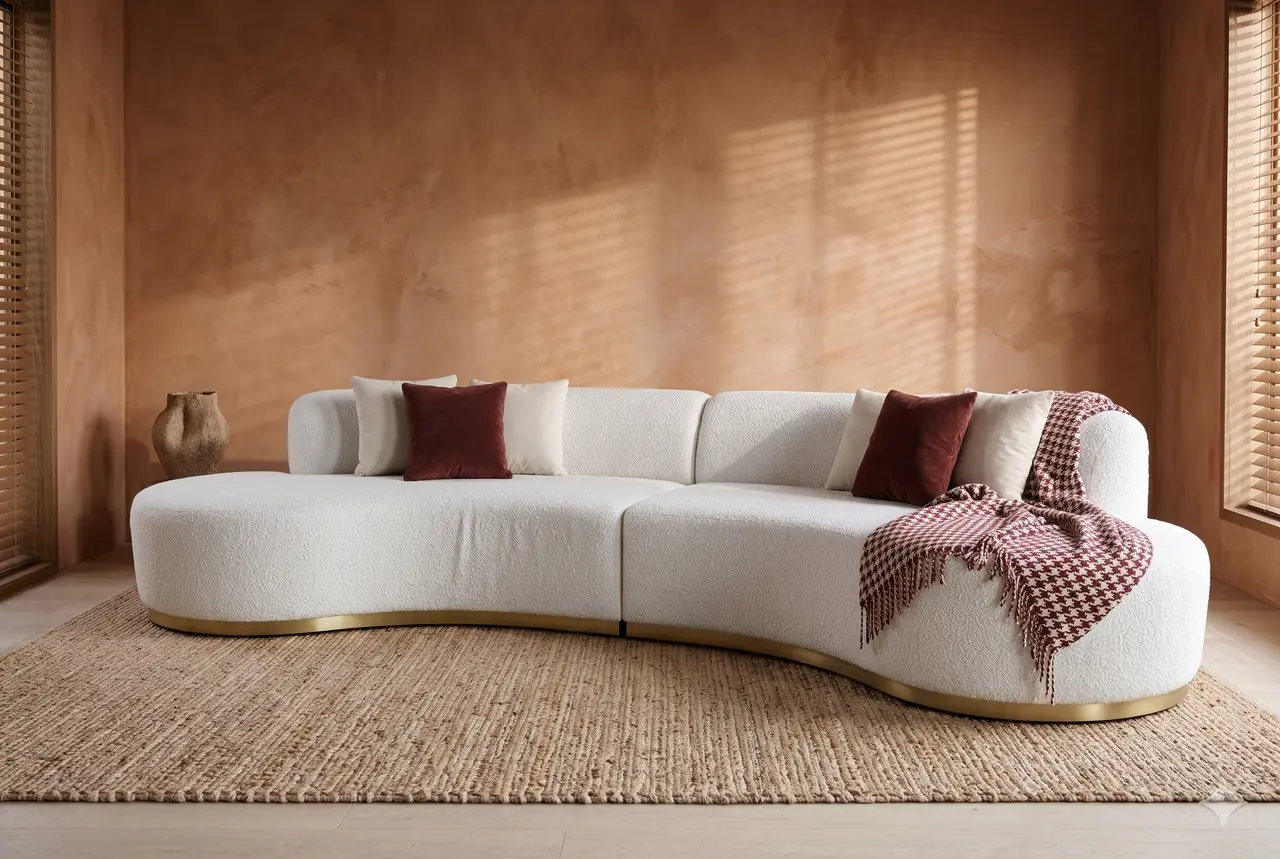 The HearthChoosing a sofa for a Hyderabad homeHow to choose a sofa for Hyderabad's heat, dust and sun: fabric, bouclé, velvet, leather or nubuck, how many seats, seat depth and the measurements to take before you buy.
 The KitchenModular kitchens in Hyderabad: what to decide before you buyPlanning a modular kitchen in Hyderabad? Layout, wet and dry kitchens, chimney and ventilation for Indian cooking, cabinet materials, finishes and countertops — decided in the right order.
 MoonHow to light a luxury home: layers, warmth and the right fixturesHow to light a home beautifully — ambient, task, accent and decorative layers, warm colour temperatures, dimmers, pendant heights and lamps — with tips for Hyderabad homes.